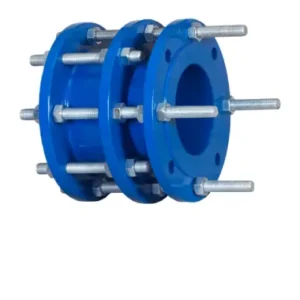
Dismantling Joints allow easy installation and removal of valves from the system during maintenance.
By using the bolts on the product, the user can create a work space in the longitudinal direction and can work easily on the valve that is connected after the dismantling joint.
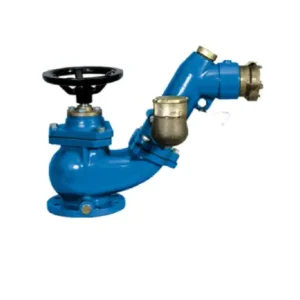
B Type Irrigation Hydrants have a special closing mechanism enabling gradual flow increase/decrease when the handwheel is turned, preventing slam closure.
Hydrants are available with an optional anti-frost sleeve for deep water networks, and an automatic drainage valve to bleed the body when the hydrant is closed, to prevent frost damages.
Nozzles that are used in hydrant connection have integral pressure regulator and flow limiter in order to provide constant pressure and flow rate to the farmer. Number of nozzles on the body can be increased up to 2 outlets, enabling supply to more than one farmer from a single hydrant.
Underground Fire Hydrants are made of ductile iron body, valve mechanism, and a spindle that controls the sealing.
When head of the hydrant is turned counter clockwise, the spindle moves down, sealing the valve at the flow direction. In the reverse action, fire hydrant shuts-off drip tight.
Underground Fire Hydrants are used with Surface Box and are buried in soil. As a result, hydrants are protected from accidents.
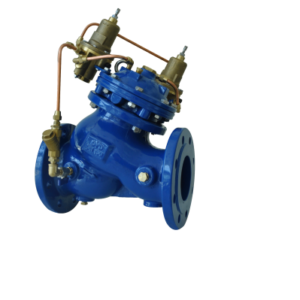
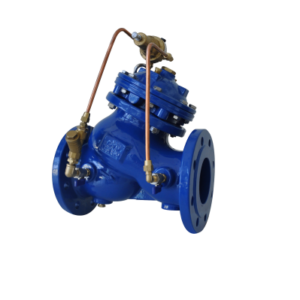
Pump Control Valves protect pumps, pipelines, and other system components by isolating the pipeline from the sudden velocity changes associated with pump starting and stopping.
The “Active Check Valve” logic of operation, is the method of pumping system control that prevents surges rather than eliminating them.




Reviews
There are no reviews yet.