- +9714 421 8369
- +971 50 379 6862
- sales@deltapower.ae


Related Products

Y Type
Y Type Strainers are installed to protect system appliances, such as: pumps, flowmeters, control valves or regulating devices.
The main function is to remove foreign matter like leaves, sticks or stones from the pipelines. Foreign particles that can harm crucial appliances in the system are stuck in the filter of the strainer, and the user can check the blockage of the filter by using monometer connections.
In case of a situation where the differential pressure reading is high, the blow-off port is used to remove entrapped debris at the bottom of the body.
Y Type Strainers feature large trap capacity, low head loss and ease of both cleaning and handling..

HDPE Spacers
For road-crossing where the fluid carrying pipe cannot be buried directly. The movement of heavy vehicles will transfer impact loads and can damage pipeline with leaking water or gas etc. In all such cases, the carrier pipe is inserted into a sleeve pipe. Spacers allow the carrier pipe to be easily pulled into the existing sleeve pipe and the traffic loads do not reach the main service pipelines. Small size carrier pipes DN50 to very large DN3000

Crepine Type
Crepine Type Strainers are installed in the entrance of pump suction pipes or in a transition from open channel to closed piping.
The main function is to protect the system from foreign matter like leaves, sticks or stones from the pipelines.
Foreign particles that can harm crucial appliances in the system are stuck in the filter of the strainer, thereby preventing entry to the pipeline.

D Type
D Type Irrigation Hydrants have a special closing mechanism enabling gradual flow increase/decrease when the handwheel is turned, preventing slam closure.
Hydrants are available with an optional anti-frost sleeve for deep water networks, and an automatic drainage valve to bleed the body when the hydrant is closed, to prevent frost damages.
D Type Hydrants are used in low pressure applications where the outlets have a flow limiter in order to provide constant flow rate to the farmer. Number of outlets on the body can be increased up to 2 outlets, enabling supply to more than one farmer from a single hydrant.
C Type
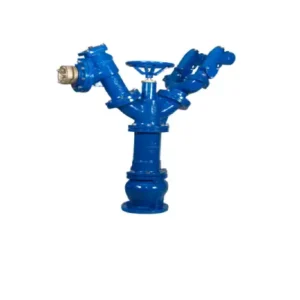
C Type Irrigation Hydrants have a special closing mechanism enabling gradual flow increase/decrease when the handwheel is turned, preventing slam closure.
Hydrants are available with an optional anti-frost sleeve for deep water networks, and an automatic drainage valve to bleed the body when the hydrant is closed, to prevent frost damages.
Nozzles that are used in hydrant connection have integral pressure regulator and flow limiter in order to provide constant pressure and flow rate to the farmer. Number of nozzles on the body can be increased up to 4 outlets, enabling supply to more than one farmer from a single hydrant.
Quick Relief
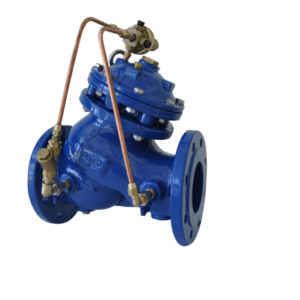
Quick Pressure Relief Valves protect pumps and water distribution systems from extreme situations by relieving the excessive pressure immediately.
It opens fully in case of a sudden pressure peak and closes drip tight when the pressure level does not exceed the pre-set pressure level.
Reviews
There are no reviews yet.